Compliant Findings, Honest Claims: Nickel Awareness at the UK Student Bench
Photo: AnonymousUnknown author, CC BY-SA 4.0, via Wikimedia Commons
Nickel belongs in the design brief
For student jewellers, nickel is often encountered indirectly: in a supplier’s earring posts, a clasp chosen for its spring, or a base-metal prototype used to prove a construction. That indirectness is precisely why it deserves attention at the design stage. Under UK REACH, nickel release from items intended for direct and prolonged contact with skin is restricted, and post assemblies for pierced ears and other pierced body parts are subject to a tighter release limit. The rule is not a blanket ban on nickel. It is a limit on how much nickel may be released from the surface of a finished article over a defined period. For the bench, the practical consequence is straightforward: the material and coating of a skin-contact component form part of the design, not an afterthought.
The distinction matters for student work because early pieces frequently combine made elements with bought findings. A hand-formed silver pendant may be carefully considered whilst its bought chain, jump rings and clasp are selected at the last minute. Earrings are especially exposed to this risk, since posts and butterflies sit in direct and prolonged contact with skin. Clasps, catches and brooch pins also warrant scrutiny. Base-metal prototypes can be useful for testing a mechanism, but they should not drift into client-facing wear without a deliberate material review. Designing for wearability before the final polish is a more reliable habit than responding after a complaint.
Read the finding before the finish
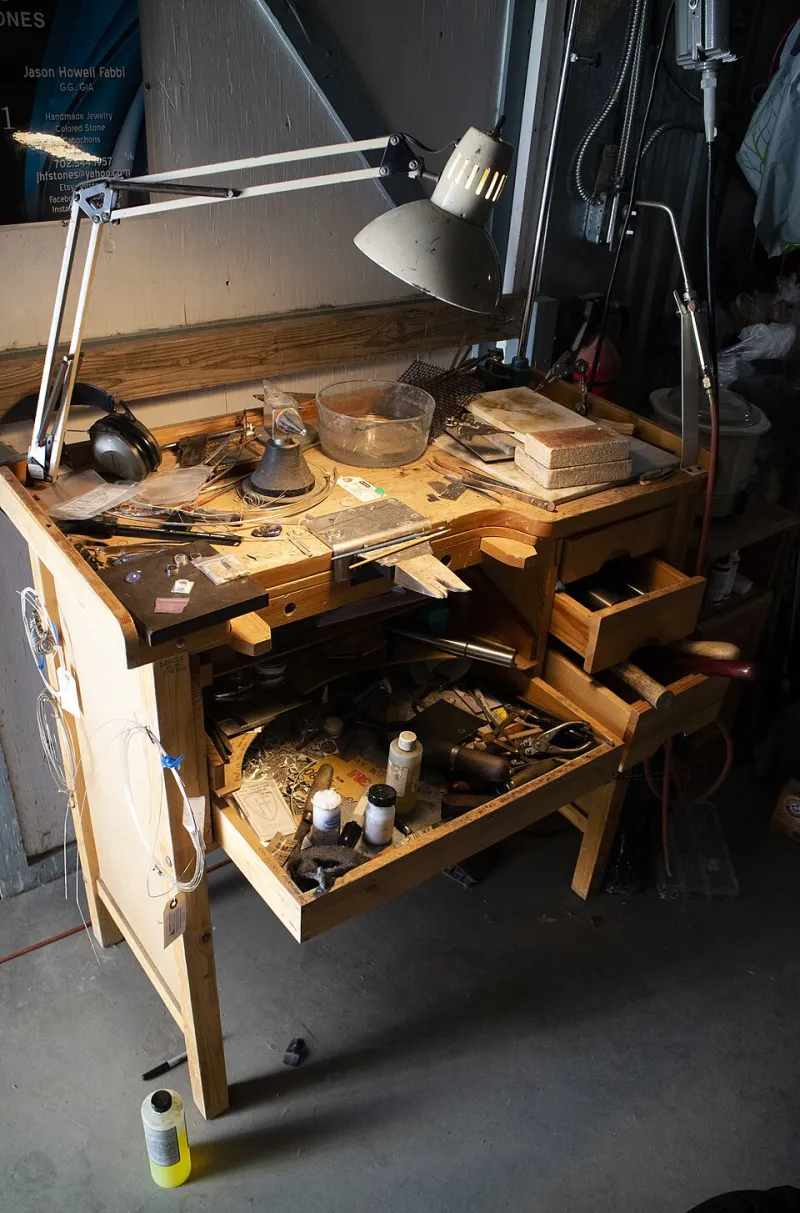
A bench-friendly protocol begins with separation. Keep known skin-contact findings in a labelled tray or drawer, distinct from general base-metal stock used for samples and jigs. Record the supplier, alloy description, coating, batch or order reference and the purpose for which the finding was bought. Supplier declarations and product pages are more useful than memory, particularly when a range changes. Terms such as ‘hypoallergenic’ and ‘surgical steel’ are not reliable substitutes for a material specification. They may describe a marketing position rather than a documented release performance.
Where a finding is intended for pierced ears, treat the post and butterfly as a single system. A compliant post paired with an unknown butterfly is still an unresolved assembly. The same principle applies to clasps: the visible outer component may be plated, whilst the spring or internal part is a different alloy. If the supplier cannot provide adequate information, the finding should be reserved for non-skin-contact use or for bench samples. This is not an obstruction to making. It is a way of assigning risk before the piece is photographed, priced or handed over.
Plating deserves particular caution. A coating may improve appearance and reduce direct contact with a substrate, but it is not a permanent guarantee. Abrasion, cleaning, repeated fastening and ordinary wear can expose the underlying metal. Student pieces that are likely to be worn often, or that use thin plating on high-friction areas, should be reviewed with that in mind. Polish and finish cannot correct a material choice that was unsuitable from the outset.
A material record at the bench
Documentation need not be elaborate, but it should be consistent. A simple material record can sit alongside the job sheet and include the following: the skin-contact components used; the supplier and order date; the stated alloy and coating; whether the component is intended for pierced skin; any alternative considered; and the final decision. Where a piece is a prototype rather than a saleable article, mark it clearly. A small tag reading ‘bench sample — not for wear’ prevents a useful test piece from being mistaken for a finished product.
This record serves three purposes. It supports consistency when a design is repeated. It provides evidence if a client later reports a reaction. And it encourages the student to think about material choices as part of the design narrative rather than as a purchasing detail. In a teaching environment, the record also makes critique more precise: a tutor can discuss the suitability of a finding without guessing what was used.
Talking about sensitive skin without overpromising
Client conversations require care. A student jeweller is not in a position to diagnose an allergy or to guarantee that a piece will suit every wearer. A measured approach is to ask whether the client has known reactions to jewellery, explain what the piece is made from, identify which components touch the skin, and state any limitations in the material record. If a client has experienced reactions before, offer alternatives where possible: a different finding, a non-pierced design, or a piece that limits skin contact. Avoid phrases such as ‘nickel-free’ unless the claim is properly supported across every component. ‘Designed with nickel-aware findings’ is a more defensible description than ‘safe for all skin types’.
If a client reports a reaction after wearing a piece, the appropriate response is to stop, record the details and advise them to seek medical advice. The bench response is to review the material record, not to offer a diagnosis. This protects both client and maker, and it reinforces the habit of designing with evidence rather than assumption.
A short bench checklist
Before a piece leaves the bench, confirm that skin-contact findings have been identified and separated from general stock; that supplier information has been retained; that earring posts and butterflies have been considered as an assembly; that plated components have been assessed for wear points; that prototypes are marked as samples; and that the client conversation matches the material record. None of these steps requires a laboratory. They require the same discipline already used for solder sequencing, stock control and costing.
The nickel boundary is therefore less a single rule than a design habit. By treating findings as designed components and recording decisions as the work progresses, UK student jewellers can reduce avoidable risk and speak about sensitive skin with clarity. The final polish should confirm a piece that was already considered for wearability, not disguise a question that was left until the end.