Neighbourly Metalwork: Acoustic Planning for a Flat-Based UK Jewellery Bench
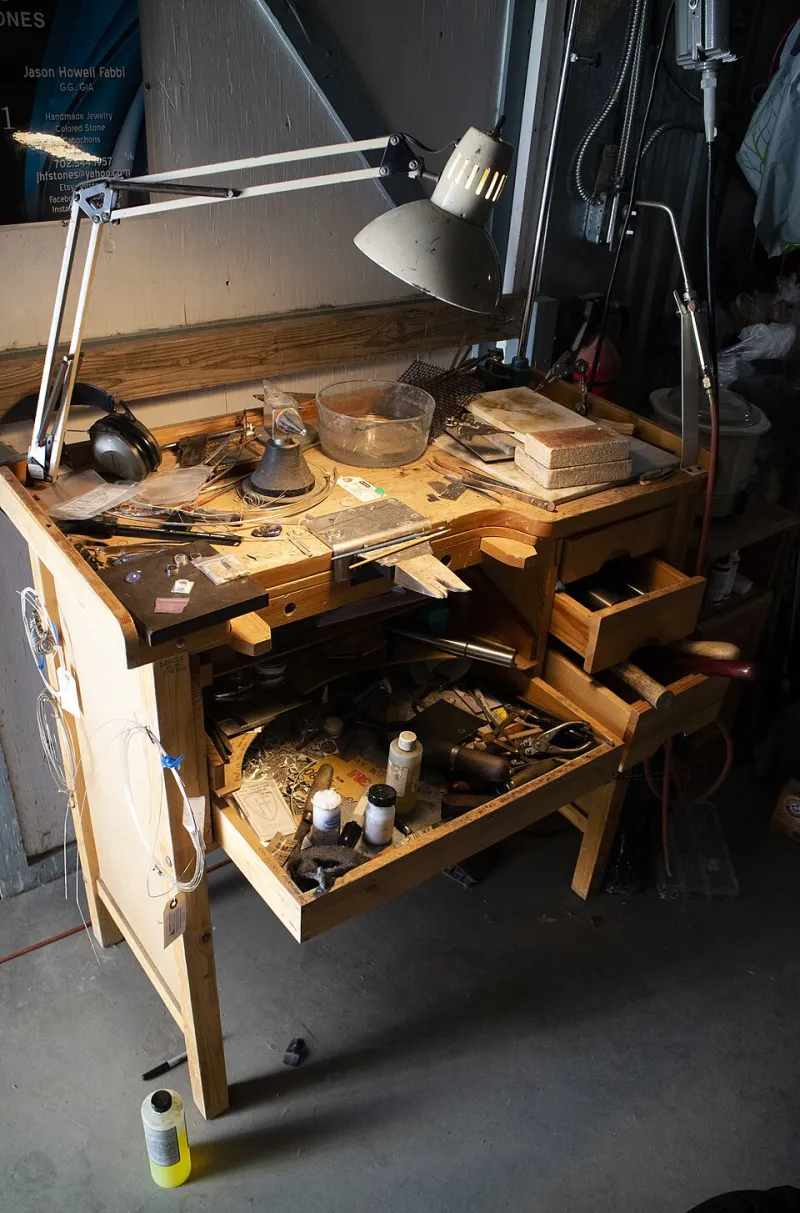
Photo: Thomas Farley, CC0, via Wikimedia Commons
A jewellery bench in a flat is never only a bench. It is a work surface, a storage system, a ventilation question and, often, a sound source. The last of these is easily overlooked because the noise of making is intermittent: a few strikes of a hammer, a run of the saw, a burst from the polisher. Intermittent sound is precisely what travels through floors and party walls, and precisely what neighbours notice. For UK students working from rented flats, shared houses or compact leasehold properties, acoustic planning belongs in the same conversation as bench height, lighting and fire safety.
The building is part of the bench
Before buying acoustic matting or rearranging a workroom, establish what kind of building you are working in. A purpose-built flat with a concrete floor behaves very differently from a Victorian conversion with timber joists. A ground-floor room away from party walls is easier than a first-floor bedroom directly above a neighbour’s living room. Note the position of shared walls, chimney breasts, service pipes and suspended floors. Sound and vibration follow structure, not just air.
Check the tenancy agreement, lease or house rules for restrictions on noise, working from home, storage of tools and use of flammable materials. Many standard assured shorthold tenancies include clauses on nuisance and on trade or business use; a jewellery bench used for study may be acceptable while a small production setup may require permission. If you rent through an agent, ask in writing whether bench work is permitted and what quiet hours apply. If you own a leasehold flat, read the lease for restrictions and ask the freeholder or managing agent about any relevant covenant. This is not legal advice; it is the ordinary due diligence of setting up a bench in someone else’s building.
Map the noisy operations honestly
Most bench processes are quiet. Piercing with a saw frame, filing, setting and polishing by hand can be managed. The problem operations are usually hammering, stamping, dome-forming, flex-shaft polishing, barrel finishing, vacuum casting and the extractor fan. Make a simple two-column list: operations that create impact noise and operations that create continuous mechanical noise. Then mark which are essential to your current project and which can be postponed, delegated to a workshop or replaced with a quieter method for the time being.
This list should sit beside your bench, not in a drawer. It becomes the basis for scheduling. In a shared house, the rhythm of the household matters: early mornings, school runs, night shifts, exam periods and working-from-home days. In a block of flats, the rhythm of the building matters: weekday office hours may be the most forgiving time for short hammering sessions, while Sunday afternoons are often the least. There is no universal quiet hour, but most UK local authorities treat persistent or unreasonable noise as a potential statutory nuisance. The practical aim is to avoid becoming the source of a reasonable complaint.
Isolate impact before softening sound
A hammer blow sends energy into the bench, the floor and the building. Absorbing the airborne sound with foam panels does little if the bench leg is rigidly coupled to a suspended timber floor. Start with the contact points. A heavy bench is better than a light folding table, but even a heavy bench can be improved with isolation pads under the feet. Dense rubber, cork-rubber composite or purpose-made anti-vibration pads are more effective than carpet offcuts, which compress and transmit energy. Check that the bench remains stable; isolation should not make the bench rock.
Place the bench away from party walls where possible, and avoid working directly above a neighbour’s bed, living room or study if you can identify the layout. A bench mat on the work surface reduces ringing from tools and workpieces but will not stop structural transmission. For hammering, use a bench block or anvil on a separate isolation base rather than directly on the bench top. Keep blows controlled and purposeful. A series of light, accurate strikes is quieter and often better metalwork than a few heavy ones.
Quieten the saw and the polisher
Sawing noise comes from the blade, the workpiece and the bench. A sharp blade cuts with less pressure and less chatter. Support the work close to the cut, use a bench peg in good condition and avoid letting thin sheet resonate. A little beeswax or suitable lubricant on the blade can reduce friction, though it must be compatible with the metal and the subsequent soldering process. Keep the saw frame tension correct and replace blades before they demand force.
Polishing is a different problem. A flex-shaft motor, dust extractor and buffing contact produce continuous sound that carries. Site the motor on a padded surface, keep the handpiece running at the lowest effective speed and use the correct mop size. Avoid polishing late at night or during early-morning hours. If a barrel finisher is used, place it on a stable, isolated surface in a room away from shared walls and run it when the household is awake. Extraction is a health necessity, not a nuisance to be silenced entirely; choose a unit with a sensible sound rating and maintain it.
Talk before the first hammer
A brief, courteous conversation before regular bench work begins is more effective than an apology after a complaint. Introduce yourself, explain that you are studying jewellery and will occasionally use hand tools, and ask whether there are times that are particularly difficult. Offer a simple contact arrangement: a message if the sound is disturbing, and a commitment to adjust. This is not a request for permission in every case, but it is a recognition that flats are shared acoustic space.
Keep a light record of what you have agreed and any changes you make. If a neighbour raises a concern, respond factually and avoid defensiveness. Most issues are about timing and repetition rather than the occasional tap of a hammer.
A rehearsal routine for quieter working
Set aside one bench session as an acoustic rehearsal. Choose a weekday daytime slot and work through the operations in your project at reduced intensity. Hammer on an isolated block for no more than a few minutes at a time, then pause. Saw for a controlled period. Run the polisher briefly. Note which operations can be heard outside the room and which cannot. Ask a household member to listen from another room, and if appropriate, from the shared hallway.
From that rehearsal, build a default schedule: quiet hand tools at any reasonable hour, short impact sessions in agreed windows, and continuous motor use only when the building is active. Review the schedule when projects change. Acoustic planning is not an admission that jewellery-making is unwelcome. It is a bench skill: the same discipline of observation, adjustment and respect for materials, applied to the building that holds the bench.