Looking Closely: Six UK Jewellery Collections for a Sketchbook Afternoon
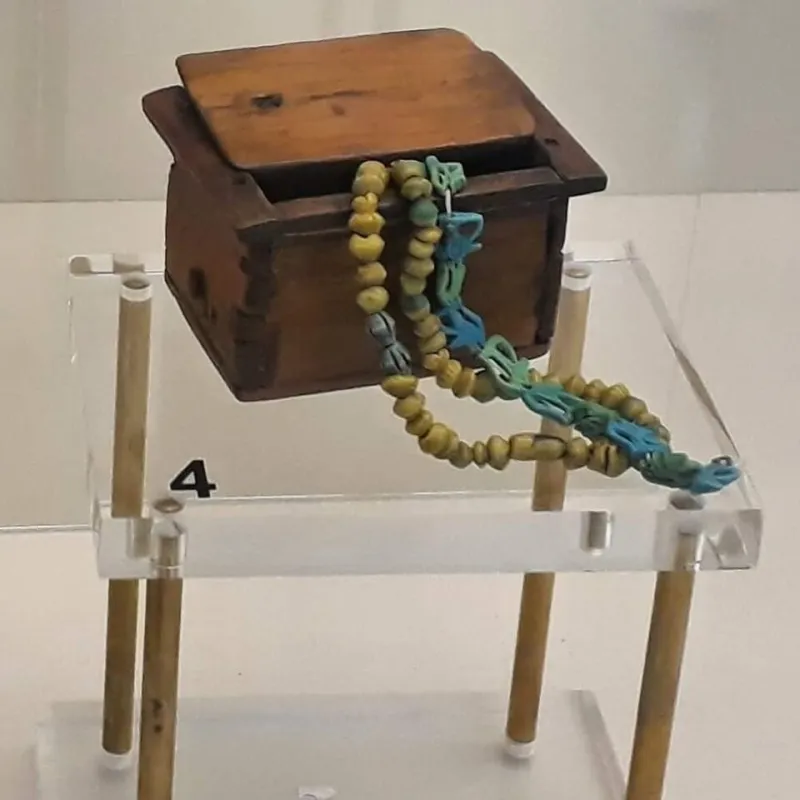
Photo: SpeakingArch, CC BY-SA 4.0, via Wikimedia Commons
Jewellery students are often advised to look at real objects, yet the advice can remain abstract. Looking is not the same as studying. A sketchbook afternoon in a UK museum collection should have a task, a time limit and a clear route back to the bench. The six collections below are not ranked. They are chosen for the range of jewellery they hold and for the different observational exercises they make possible.
Before setting out, check current opening hours and gallery rules. Many UK museums ask visitors to use pencil rather than ink, and some temporary displays prohibit drawing. Record the museum, gallery, object label and date of your visit. A sketchbook without provenance is merely a notebook.
1. Victoria and Albert Museum, London
The Jewellery Gallery at the V&A is a natural starting point for any UK student. The collection ranges from ancient work to contemporary studio jewellery, and the displays reward close attention to setting height, gallery proportions and the relationship between metal and stone.
Exercise: Choose one ring and draw its side profile at actual size. Then draw it again at three times the scale. Note how the setting sits above the finger and how the shank meets the shoulder. Do not draw the front view. The profile is where construction often reveals itself.
Development: Cut a strip of card to match the profile and wrap it around a pencil. Change one proportion, such as the height of the setting or the width of the shank. This is not a copy; it is a study in proportion.
2. British Museum, London
The British Museum holds broad historical jewellery collections, including Romano-British and medieval material. The value for a student lies in seeing fastenings, worn surfaces and repairs that are often invisible in photographs.
Exercise: Draw only the fastening of one object. Ignore the decorative surface. How does the piece close? Where does the wear fall? Make a diagram with arrows rather than a pictorial sketch.
Development: Invent a closure that solves the same problem but uses a different mechanism. Test it in paper or wire before drawing it as a finished design. The historical object is evidence, not a template.
3. Birmingham Museum & Art Gallery
Birmingham’s jewellery collections connect directly to the city’s Jewellery Quarter and its manufacturing history. For students interested in repeatable production, chain, findings and small mechanisms are particularly worth studying.
Exercise: Find one chain and draw its repeating unit. Count the links in a short section and note the proportion of link length to width. Then make a ten-centimetre paper chain that alters one proportion while keeping the rhythm.
Development: Translate the paper chain into a short metal sample, or use it as the basis for a necklace layout. The aim is to understand repetition, not to reproduce a historical chain.
4. National Museum Cardiff
National Museum Cardiff holds decorative art and archaeological material that rewards attention to surface and colour. Welsh collections can be particularly useful for students thinking about local identity, material sources and the difference between ornament and structure.
Exercise: Draw one object’s colour relationships as a set of swatches, not as a picture. Limit yourself to five colours and note where each appears. Then draw the object’s silhouette in three quick lines.
Development: Use the swatches and silhouette to design a brooch or pendant in a different material. Keep a written note of the source object and explain which element you changed: scale, material, function or construction.
5. Kelvingrove Art Gallery and Museum, Glasgow
Kelvingrove offers Scottish decorative arts and a broad social history context. Jewellery displayed alongside other objects can be especially useful for students who want to understand how ornament relates to dress, class and occasion.
Exercise: Draw the negative space around a piece of jewellery rather than the object itself. Then draw the object from memory. Compare the two drawings and note what your memory simplified.
Development: Make a paper cut-out that uses the remembered negative shape as a starting point. Change the function entirely, for example from a brooch to a hair ornament, and record why.
6. National Museums Scotland, Edinburgh
National Museums Scotland holds Scottish silver, historic jewellery and archaeological material. For students interested in repair, wear and longevity, the collection offers objects that have clearly lived beyond the display case.
Exercise: Find one object with visible wear, a repair or a replacement part. Draw the damage rather than the design. Note the colour of the wear, the depth of the scratch and the way the repair was executed.
Development: Design a detail that would age honestly, such as a reversible setting or a repairable clasp. Write a short paragraph explaining how the piece could be maintained rather than replaced.
From gallery notes to design development
A sketchbook afternoon should end with questions, not a facsimile. On the train home, review your notes and separate observation from interpretation. Mark which drawings are records and which are proposals. Then set a small design task that changes one variable: scale, material, function or construction.
Do not trace historical pieces. Do not reproduce a museum object with a minor alteration and call it original. Instead, isolate a principle: a setting height, a chain rhythm, a closure, a wear pattern. Test that principle in paper, wire or card. Record the source object and the change you made. This is how looking closely becomes design development rather than copying.
For UK jewellery students in 2026, a museum visit is not a break from bench work. It is bench work at a slower speed, with better objects and fewer distractions.