Before the Punch: Designing Student Jewellery for UK Hallmarking in 2026
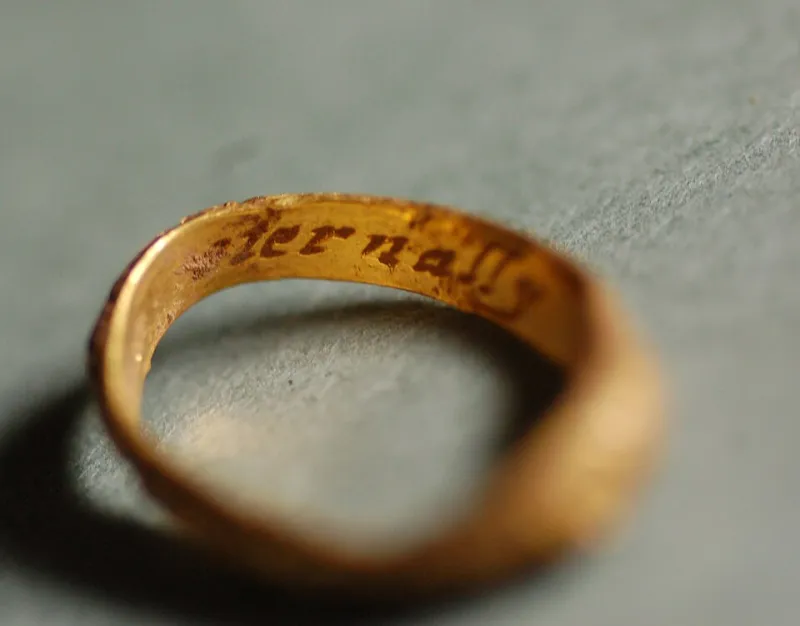
Photo: Bristol City Council, Kurt Adams, 2009-02-11 10:45:47, CC BY-SA 4.0, via Wikimedia Commons
Hallmarking has a reputation problem. It is often presented as a dry compliance step, a set of stamps applied after the creative work is finished. For student and emerging jewellers in the UK, that framing is unhelpful. Hallmarking is part of the making process, and the pieces that pass most smoothly are usually the ones designed with the assay office in mind from the start.
This guide is not legal advice, and fees and procedures change. It is a practical map for 2026: how to choose an assay office, register a maker's mark, budget for submission and avoid the design faults that cause unnecessary delays.
Choosing the right assay office
The UK has four assay offices: London, Birmingham, Sheffield and Edinburgh. Each offers maker's mark registration and assay services, and each has its own counter arrangements, postal process and turnaround pattern. For a student, the choice is often practical rather than symbolic.
A maker in Manchester or the Midlands may find Birmingham's Jewellery Quarter convenient. A Scottish student may prefer Edinburgh. A London-based graduate may use the London assay office because it fits a weekly routine. Postal submission widens the options, but it adds insurance and packing time. Before registering, compare current fees, minimum charges, turnaround and the format of maker's mark each office accepts.
Do not leave the decision until the week before a degree show. Registration and punch manufacture take time, and a first submission often reveals questions that need answering.
The maker's mark is a design decision
The maker's mark, sometimes called the sponsor's mark, identifies the business responsible for the article. It is registered, unique and applied alongside the fineness mark, assay office mark and date letter. Students often treat it as a graphic design task. It is better understood as a bench decision.
A punch must strike cleanly at a small scale. Fine detail, thin lines and complex logos may fill with metal or become illegible. Initials in a simple surround are common for a reason. If laser marking is available, ask the assay office what it requires for depth and contrast; a laser mark is not simply a printed logo.
Placement matters as much as the design. On a ring, the inner band is traditional, but a narrow band may not offer enough clear space for four marks. A 2.5mm band with a maker's mark, fineness mark, assay office mark and date letter can become crowded. A slightly wider band, a moved mark or a different form may solve the problem before it reaches the assay office.
On a pendant, the reverse may be better than a hidden edge. On a bangle, a flat area away from the catch is usually easier than a curved surface near a seam. Avoid placing marks across solder joints, near stone settings or on areas that will be removed during finishing. The mark should be readable after polishing, not just before.
Designing for assay, not around it
Hallmarking is not a punishment for poor making, but it does expose certain faults. The most common problems in student work tend to be predictable.
- Metal below the declared standard. A solder, finding or component may not match the main alloy. Check every part of the piece, not just the visible body.
- Porosity and pits. Cast pieces with surface defects may not take a clean mark. Try to submit sound surfaces and discuss any doubtful areas with the assay office.
- Mixed metals. A silver piece with a gold bezel or a base-metal pin needs careful declaration. The assay office will advise on how the article should be marked, but the maker must describe it accurately.
- Assembled pieces. Seams, hollow sections and inaccessible interiors can complicate marking. Leave a clear, flat area and avoid designs where the only suitable space is a joint.
- Stones in the way. Where possible, submit pieces before setting. If a stone must be set first, check the assay office's policy and accept that marking may be restricted.
A useful student habit is to draw the hallmark area on the technical drawing. Mark its position, approximate size and clearance from edges. This turns a vague intention into a measurable part of the design.
Budgeting for a first submission
Hallmarking costs are rarely limited to the assay charge. A realistic student budget should include maker's mark registration, punch manufacture or laser setup, assay charges per article, minimum submission charges, insured postage and the cost of re-making any failed pieces. For a batch of twenty silver rings, the per-item cost may look modest, but a minimum charge can dominate a small submission. For a single gold pendant, postage and insurance may be a significant proportion of the total.
Batch sensibly. Submit a group of pieces together where the alloy and paperwork allow, but do not rush unfinished work into the post simply to fill a box. A rejected piece costs more than a delayed one.
Timelines deserve the same care. Allow at least two to three weeks for a first submission, and longer if registration, punch approval or re-making is involved. Degree show deadlines, Christmas and wedding season all put pressure on assay offices. Ask for current turnaround times rather than relying on last year's memory.
Paperwork, records and student examples
Clear paperwork reduces queries. Describe each article by type, alloy, approximate weight, quantity and any components. Use consistent names. If a piece includes a finding, catch or stone, say so. Keep a copy of the submission and record the marks returned.
A common student scenario is a mixed batch: ten silver rings, five gold pendants and a handful of brass maquettes. The brass pieces should not be mixed into the precious metal submission without advice. Another scenario is a silver brooch with a gold accent. The maker may intend the gold to be decorative, but the assay office needs an accurate description to mark it correctly.
Good records also help after graduation. A maker's mark is a business asset. Knowing which pieces were marked, when and by which office is useful for repairs, customer queries and future collections.
A 2026 checklist for emerging makers
- Confirm the current exemption weights for each precious metal. Articles below the statutory limits may be exempt from compulsory hallmarking, but descriptions must still be accurate.
- Register the maker's mark early and order the punch or laser setup in good time.
- Design a clear, flat marking area into the piece and keep it away from seams, settings and edges.
- Check that findings, solders and components match the declared standard.
- Submit unset where possible, or confirm the assay office's policy for set stones.
- Budget for registration, assay, postage, insurance and re-makers.
- Keep copies of all paperwork and a record of returned hallmarks.
Hallmarking is easier when it is treated as part of the design conversation. The punch is small, but the decisions behind it are not. In 2026, student jewellers who plan for the assay office will spend less time correcting avoidable problems and more time making work that is ready for the market.