Mend First, Make Better: Why Repair Belongs at the Start of UK Jewellery Training
Photo: jewellery repair bench close up jeweller tools clamp ring UK workshop, via i5.walmartimages.com
At Holt's Academy, the first question a new student often asks is what they will make. It is an understandable question, and a useful one. Yet it can conceal a gap in UK jewellery training: the assumption that making comes first and repair comes later, once basic skills are secure. This article argues that the order should be reversed. In 2026, repair and restoration should sit earlier in UK jewellery education, not as a remedial add-on but as a core route to bench judgement.
Why repair belongs at the start
A new piece is a controlled conversation between maker, metal and design. The maker chooses the alloy, the solder, the setting method and the order of operations. Repair is a different conversation. The maker inherits decisions made by someone else, sometimes decades earlier, and must work within tolerances that are not recorded on a drawing. That is precisely why it is such good training.
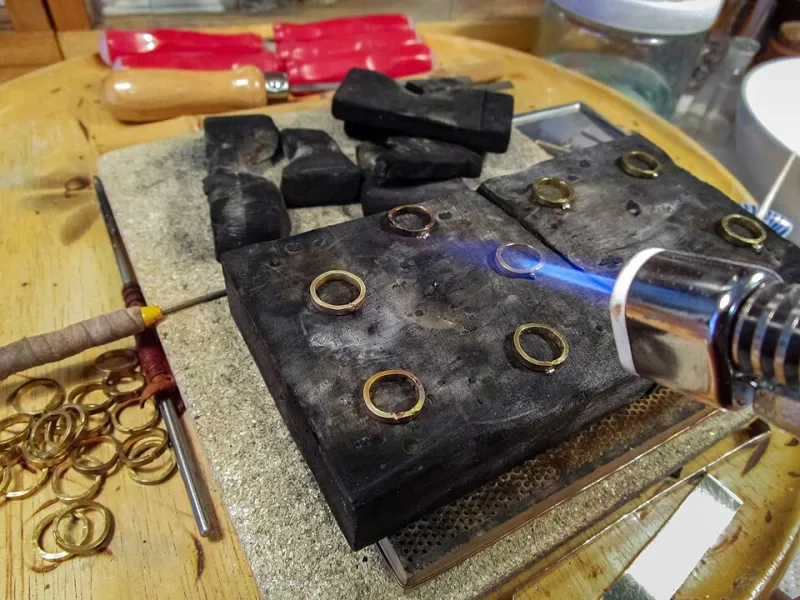
Re-tipping a claw is a small operation with large consequences. The tip must be rebuilt without altering the stone's seat, without overheating the setting and without creating a solder line that will fail again in six months. Re-sizing a band requires the student to read the existing construction: is it hollow, seamed, patterned, plated or already repaired? A stone re-set after a knock demands a diagnosis of wear rather than a simple tightening. Each task asks the student to observe before acting.
In many UK workshops, this is everyday work. A repair desk in Birmingham's Jewellery Quarter may see a Victorian brooch, a modern titanium ring and a child's silver bangle in the same morning. A small studio in Edinburgh may spend an afternoon restoring a family ring that has already been altered twice. These pieces do not arrive with full histories. The bench worker must infer, test and decide. That is a higher-order skill than following a project brief, and it deserves earlier attention.
What the repair bench teaches that new making does not
New making teaches control. Repair teaches judgement. The difference matters.
First, repair trains the eye for wear. A student who has examined fifty worn claws will begin to recognise the subtle thinning that precedes a lost stone. A student who has re-sized a dozen bands will notice the stress marks that indicate a previous repair. This diagnostic habit is difficult to simulate in a new-make project, where the metal is fresh and the maker knows every stage.
Second, repair forces restraint. It is tempting for a student to solve every problem with more solder, more metal or a fresh setting. On a repair bench, excess is visible. A heavy-handed re-tip can make a delicate claw look clumsy. An over-polished band can remove a maker's mark or a decorative surface. Repair teaches the student to stop sooner and to choose the least invasive intervention.
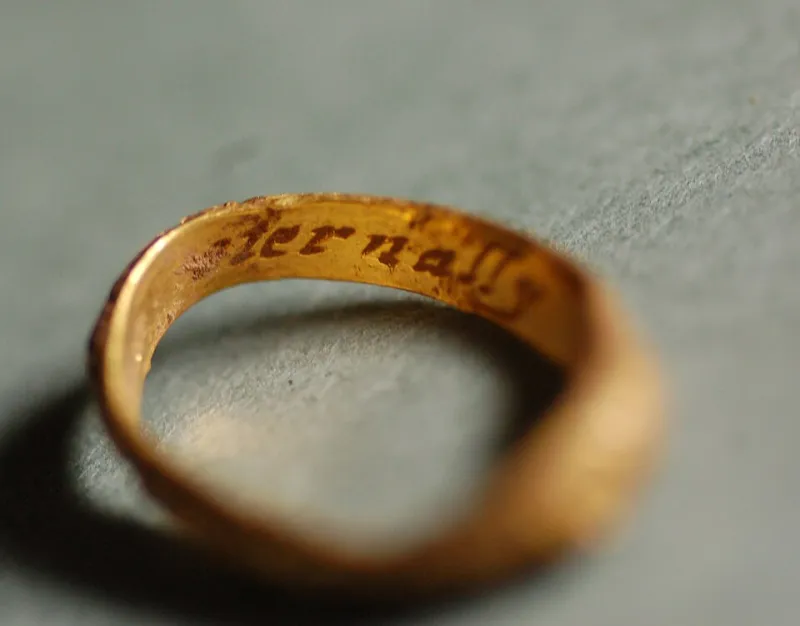
Third, repair demands respect for another maker's work. This is an ethical as well as a technical lesson. The student is not simply fixing an object; they are handling a client's history. A ring may carry sentimental value that outweighs its commercial worth. A brooch may be the last remaining piece from a family business. Learning to explain options, limits and risks is part of professional practice.
At Holt's Academy, student exercises could begin with anonymous scrap pieces rather than client work. A box of damaged bands, tired settings and incomplete castings can provide weeks of diagnostic practice. The aim is not to produce perfect repairs but to build a record of decisions: what was found, what was ruled out, what was attempted and what was learned.
A practical curriculum proposal for 2026
Academies do not need to rebuild entire programmes to make room for repair. A measured insertion can work well.
- Introduce a short diagnostic module in the first term, alongside basic sawing, filing and soldering. Students should handle worn pieces, identify likely causes of failure and practise non-destructive cleaning and inspection.
- Add a supervised repair clinic in the second term. Start with low-risk tasks such as re-tipping plain claws, tightening settings and re-sizing simple bands in base metal or silver. Keep client work separate until insurance, risk assessments and supervision are in place.
- Teach documentation from the beginning. A simple bench sheet covering the item, alloy, faults, proposed treatment, agreed limits and final checks will prepare students for workshop practice better than a polished final object alone.
- Invite a local repair jeweller to set a diagnostic exercise. A visiting professional can show how they assess a piece before quoting, and why they sometimes refuse a repair. This brings industry reality into the studio without turning the session into a sales talk.
- Assess judgement, not only finish. A student who identifies a hidden seam, warns of a risk and chooses a conservative repair may be demonstrating more skill than one who produces a visually neat result by overworking the piece.
None of this replaces new making. It supports it. A student who understands how jewellery fails will design more thoughtfully, solder more cleanly and set stones with a better sense of where stress will fall.
The cost of leaving repair late
When repair is left until the final stages of training, several problems follow. Students may develop a fear of client work because they have never handled an unknown piece. They may over-rely on replacement rather than restoration. They may also absorb the idea that repair is a lesser activity than design or new making, when in fact it is one of the clearest tests of a jeweller's judgement.
The UK trade needs makers who can mend as well as make. Repair work sustains local high streets, keeps sentimental objects in use and supports the circular economy that many customers now value. Academies that teach it earlier will send graduates into workshops better prepared for the realities of the bench.
Mending as a measure of skill
The argument is not that every student should become a restorer. It is that every jeweller should learn to look at an existing object with the same care they bring to a new one. Repair teaches that skill because it removes the comfort of full control. The metal has a history, the client has a story and the bench worker has to decide what is possible.
In 2026, UK jewellery training should make that decision-making visible from the start. Mend first, and the making that follows will be better judged.