Pulling Lessons: Wire, Work-Hardening and the Discipline of the Drawplate
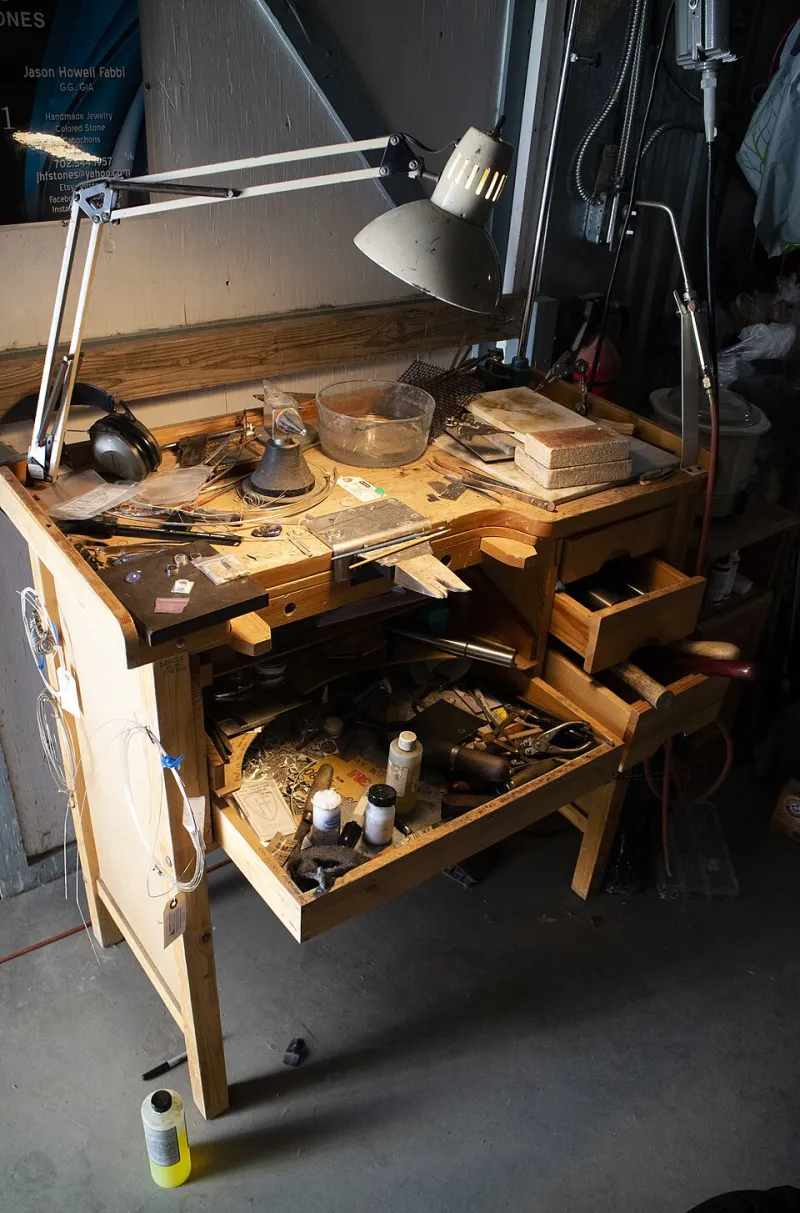
Photo: jewellery bench drawplate wire drawing tongs UK, via sciencenotes.org
Wire is usually bought by the coil, labelled by gauge and treated as a stock item. The drawplate changes that relationship. When a student reduces a length of wire by hand, the metal stops being a commodity and becomes a record of every anneal, every pull and every moment of impatience. For UK jewellery students working with expensive silver or limited offcuts, that record is worth keeping.
Why make wire at the bench
Drawing wire down from a thicker gauge is not efficient for every task. It is, however, an excellent rehearsal in stock discipline. Offcuts that would otherwise sit in a jar can become findings, prongs, ear wires or decorative line. The maker learns how much reduction a metal will take before it work-hardens, how annealing changes colour and feel, and why a scored drawplate ruins a length of wire faster than a bad solder joint ruins a ring.
The drawplate also exposes the difference between force and control. A wire that will not pass through a hole is not asking for a harder pull. It is usually asking for annealing, lubrication or a smaller reduction.
Set up and record before pulling
A drawplate is a hardened plate with a series of tapered holes. It should be clean, dry and free of burrs. Mount it securely in a vice or drawbench so that the wire runs straight. Use draw tongs that grip without crushing the wire, and keep a file, pickle, annealing surface, quenching vessel and lint-free cloth within reach.
Begin a simple diary before the first pull. Record the date, alloy, starting gauge, length, annealing history, lubricant, hole sequence, final gauge and any faults. A notebook is enough, but a table is better because it invites comparison. Use millimetres as the primary record and note the standard wire gauge only if a supplier or brief uses it. Mixed records are how stock becomes guesswork.
Step by step
- Anneal the wire if it is work-hardened. Heat evenly to a dull red in subdued light, then quench and pickle according to the metal and workshop protocol. Rinse and dry thoroughly.
- File a long, gradual taper at one end. A blunt or asymmetric taper will catch, score or snap.
- Lubricate the wire and the relevant drawplate hole sparingly. Beeswax, a suitable drawing lubricant or soap can be used according to workshop practice. Excess lubricant attracts grit.
- Insert the tapered end through the correct hole from the entry side and grip it with draw tongs. Pull steadily and in line with the hole. Do not lever sideways.
- Reduce in small steps. Do not jump several holes because the wire feels cooperative. If resistance rises, stop, anneal and clean the plate.
- Anneal when the wire hardens or begins to spring back strongly. Pickle, rinse, dry and continue. Record each annealing cycle.
- Coil, label and store the finished wire with its alloy, gauge, length and date. Loose wire without a label is not stock; it is future confusion.
Common faults and what they indicate
| Fault | Likely cause | Bench response |
|---|---|---|
| Wire snaps | Too much reduction, work-hardening or a nicked taper | Anneal sooner, reduce in smaller steps, file a smoother taper |
| Wire sticks | Insufficient lubrication, dirty plate or pulling at an angle | Clean the plate, lubricate lightly, align the pull |
| Scored or ribbed surface | Burred hole, grit or unsuitable lubricant | Inspect the plate, clean thoroughly, reject damaged holes |
| Oval or twisted wire | Worn plate or uneven pull | Use a sound hole, pull straight and check the plate for wear |
| Contamination | Mixed metal, dirty annealing surface or dirty tools | Keep alloys separate, clean surfaces and label stock |
| Over-annealed wire | Excessive heat or repeated annealing without need | Use controlled heat and record each cycle |
The diary as a teaching tool
A drawplate diary is not bureaucracy. It is a way to compare one length of wire with the next. After a few weeks, patterns appear: a particular alloy may need earlier annealing; a certain hole may be scoring; a lubricant may be leaving residue. The diary turns those observations into bench knowledge rather than folklore.
For students, the diary also supports costing and material claims. If a piece uses hand-drawn wire, the record shows the labour and the source. That matters in applications, competition statements and honest pricing. It also makes you a better judge of when to buy wire and when to draw it. The drawplate is not a substitute for good stock control. It is a rehearsal in it.