The Signed Measurement: Ring Sizing as a Rehearsed Bench Skill for Student Commissions
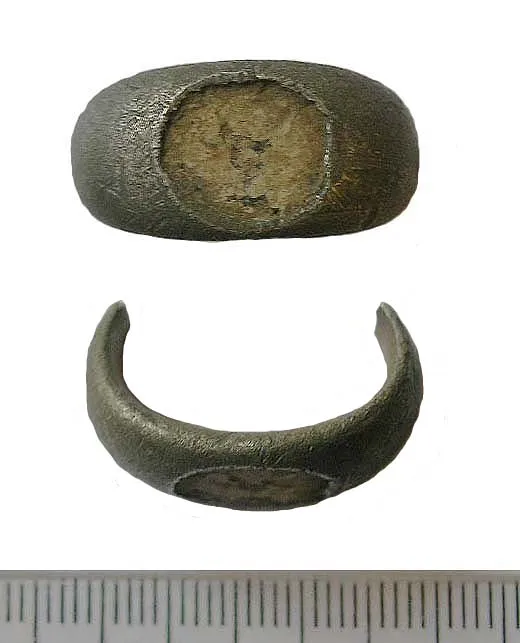
Photo: The Portable Antiquities Scheme, Julian Watters, 2004-09-20 15:29:17, CC BY-SA 2.0, via Wikimedia Commons
A ring that fits badly will overshadow the quality of its making. For students working on early commissions, sizing is therefore not a footnote to design but a bench skill in its own right: one that rewards rehearsal, documentation and a little healthy scepticism about the idea that a single measurement is ever enough.
Why sizing belongs on the bench, not at the edge of design
In a teaching workshop, the temptation is to settle the size early and move on to the more visible work of forming, soldering and setting. The difficulty is that ring sizing sits at the junction of several variables: the client's hand, the chosen band, the workshop temperature, the time of day and the limits of the chosen design. Treating it as a design-stage formality leaves too much to memory and too little to evidence.
A better approach is to make sizing a short, repeatable bench procedure. It should have its own tools, its own record sheet and its own rehearsal time on scrap bands or stock rings. The aim is not to make sizing bureaucratic. It is to reduce the chance that a well-made ring returns to the bench because the client, quite reasonably, expected it to fit.
The UK letter system and the measurement record
UK ring sizes are expressed as letters, generally running from A to Z with half sizes between. A size L, however, should never be recorded as a bare letter and left to memory. Suppliers, gauges and converted international sizes can introduce small differences, and a student commission deserves a more robust record.
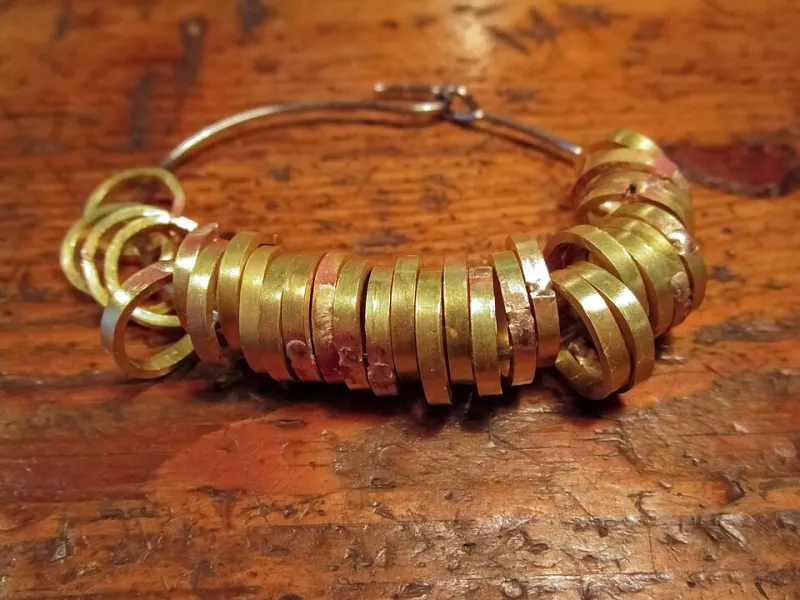
Measure with a reliable ring gauge or a set of sizing rings, then record the UK letter alongside the internal diameter in millimetres. If the client has brought an existing ring that fits well, use callipers to measure its internal diameter and compare that figure with the gauge. Where the existing ring is narrow or worn, note that too: a thin, old band may not represent the fit of a new 6 mm court ring.
The record should also state which hand and which finger were measured, since dominant and non-dominant hands can differ. For a first commission, measure at least twice, ideally on separate occasions or with a second person present. In an academy setting, a tutor's countersignature on the measurement record is a sensible safeguard, not a sign of distrust.
Temperature, time and the hand under test
Fingers change size. Heat, cold, hydration, exercise, salt intake and the time of day all influence the reading. A hand measured after a cold walk across a UK campus in February may not be the same hand measured in a warm studio an hour later. Equally, a hand measured first thing in the morning may not represent its late-afternoon state.
A practical protocol is to measure at room temperature, after the client has been in the workshop for at least fifteen minutes, and preferably in the afternoon or early evening. Avoid measuring immediately after exercise, after a hot drink or after exposure to cold. If the client is nervous, allow time for the hand to settle. Record the conditions briefly on the sheet: date, time and a note such as warm studio or cold hands on arrival. This is not excessive detail. It is the kind of evidence that helps when a fit is discussed later.
Comfort fit, band width and the allowance question
A comfort-fit band has a rounded inner profile, which can make a ring feel looser than a flat-profile band of the same measured size. Band width matters as well. A narrow band and a wide band do not behave in the same way on the hand, and a design with a deep profile may feel tighter than its internal diameter suggests.
As a starting point for discussion, a band wider than about 4 mm may need a half-size allowance, while a band of 7 mm or more may need a full size. These figures are not rules to apply blindly. They are prompts for a measured conversation with the client and, in a student context, with the tutor. The sign-off sheet should record the band width, the profile and whether a comfort-fit allowance was agreed. If the client has chosen a very wide band, consider making a temporary brass or copper mock-up so the fit can be assessed before the final metal is cut.
A sign-off sheet that protects both client and student
A simple client sign-off sheet does not need to be elaborate. It should include the client's name, the date and time of measurement, the hand and finger, the UK letter size, the internal diameter in millimetres, the band width and profile, any comfort-fit allowance, and a note of the conditions at measurement. It should also state the agreed final size and the studio's policy on resizing.
The client should sign to confirm that the size was measured and discussed, and that they understand any stated limits. The student and tutor should countersign. This is not about shifting responsibility onto the client. It is about creating a shared record that supports good decision-making. In an academy context, it also gives the student a professional habit to carry into later practice.
Troubleshooting: wide bands, knuckle clearance and resizing limits
Wide bands are the most common source of fit complaints. A wide ring has more contact area and can feel tight even when the diameter matches the client's usual size. Where the design allows, consider a slight increase in size, a comfort-fit profile or a tapered inner surface. If the band is very wide, a mock-up is often the most honest test.
Knuckle clearance is another frequent issue. If the knuckle is noticeably wider than the base of the finger, the ring must pass over the knuckle while still sitting securely at the base. In such cases, sizing solely to the base measurement can produce a ring that will not go on. Sizing solely to the knuckle can produce a ring that spins. The answer is usually a compromise, discussed openly with the client, and sometimes a design adjustment such as a hinged shank or an open profile. Those are design decisions, not sizing failures.
Resizing limits should be established before the commission is accepted. Full eternity rings, rings with continuous settings, some patterned bands and certain metals may be difficult or impossible to resize without compromising the design. Even where resizing is possible, repeated alterations can affect structural integrity and may disturb a hallmark. In the UK, students should be aware that hallmarking is a legal requirement for many precious metal items and that resizing can affect marks; advice should be sought from the relevant assay office, whether Birmingham, London, Sheffield or Edinburgh, where necessary.
A rehearsal worth repeating
The size stick, gauge and callipers do not lie, but they only tell part of the story. The rest lies in the record, the conversation and the willingness to measure again. For student commissions, ring sizing should be rehearsed like any other bench technique: calmly, consistently and with a paper trail that both client and maker can trust. A ring that fits is not a happy accident. It is the result of a procedure that was taken seriously from the first measurement to the final signature.