Six Small Mechanisms, One Standard: Clasp Rehearsal for UK Jewellery Students
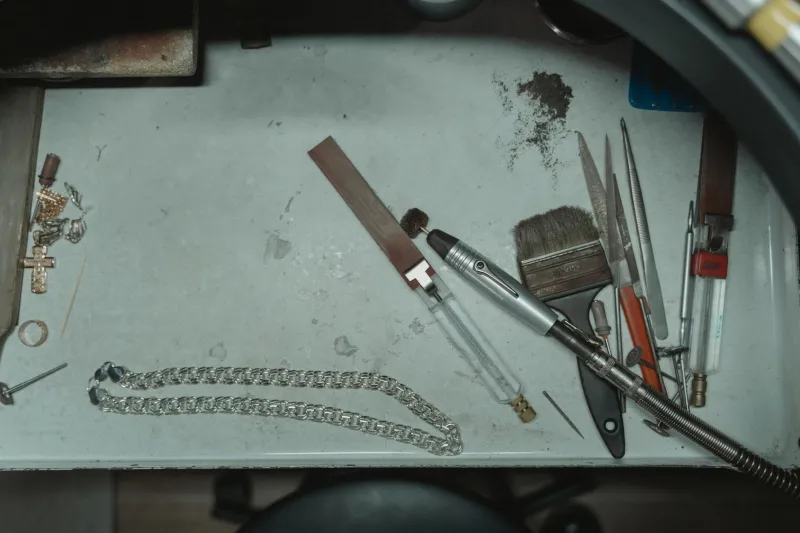
A finished chain can survive a hundred careful links and still fail at the clasp. In UK jewellery training, however, fastenings are frequently treated as bought-in afterthoughts rather than as mechanisms worthy of their own bench time. That is a mistake. A clasp is the point where the wearer meets the piece; it is opened, closed, tugged and trusted. For students preparing for assessment, craft fairs or early commissions, clasp rehearsal builds judgement in miniature: tolerance, spring tension, solder control, ergonomics and security. At Holt's Academy, we treat the clasp cluster as a distinct bench discipline.
Why fastenings deserve their own bench slot
Small mechanisms expose weak habits quickly. A ring band may forgive a slightly heavy solder seam; a lobster clasp will not forgive solder that has wicked into the spring housing. A box clasp will not tolerate a tongue that was fitted before the final polish. Clasp work also teaches repeatability. Students who make ten of the same fastening learn more about consistency than they do from a single ambitious project. In the UK market, where repair costs can approach the value of a simple piece, a reliable fastening is part of professional credibility. It is also part of the customer's daily experience.
Lobster clasps: spring tension and trigger geometry
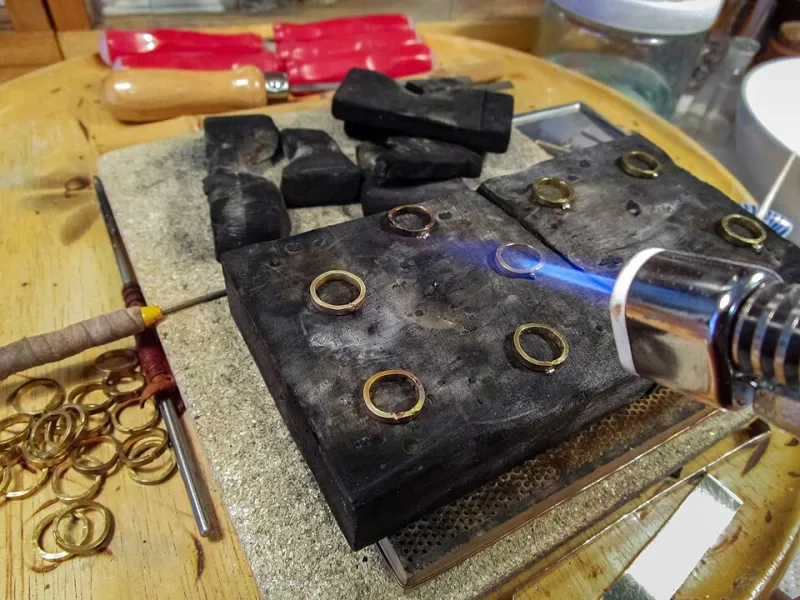
Lobster clasps are familiar, affordable and easy to fit badly. Rehearsal should begin with inspection: check that the trigger returns cleanly, that the gate closes flush and that the attachment ring has enough movement. A useful exercise is to fit ten lobster clasps to prepared chain ends, using a heat sink or third hand to protect the mechanism during soldering. Common failures include solder migration into the pivot, oversized jump rings that let the clasp twist, and filed edges that leave a sharp burr inside the gate. Finishing notes: polish the clasp body before final assembly, clean pickle residue thoroughly, and test the trigger twenty times before the piece leaves the bench.
Box clasps: alignment, tongue fit and snap
Box clasps reward patience. Students should assemble five box clasps with slightly different tongue depths and record how each snaps. The aim is not merely a closure that holds, but one that seats with a controlled click and no lateral rattle. Failure points cluster around alignment after soldering, tongues that are too loose to stay engaged, and sharp corners that catch clothing. Pre-finish the interior surfaces before closing the box, use a small escapement file to adjust the tongue, and test the clasp under light load before the final polish. A box clasp that has been tested only on the bench, never on a chain, is not yet tested.
Toggles: proportion and gravity
Toggle fastenings depend on proportion. A bar that is too short can slip through the ring; a ring that is too large can release under movement. A practical exercise is to make three toggle sets from wire or rod, varying ring diameter and bar length, then hang each with a sample chain and test it through repeated opening and closing. Common failures include bars that are too light, rings that deform under load, and chain twist that encourages release. Finish by rounding the bar ends, controlling annealing so the bar does not become soft, and checking that the toggle hangs naturally when worn.
S-hooks: shape memory and load
S-hooks look simple and behave unpredictably. Students should form S-hooks in three wire gauges, then test each under repeated load and bending. The exercise reveals how work-hardening can lead to cracks, how uneven curves affect security, and how the hook tip must be shaped to prevent accidental opening. Failure points include hooks that open under the weight of a heavy pendant, tips that are too sharp, and curves that have been over-annealed and lost shape memory. File and polish the tips without thinning the load-bearing curve, and test the hook with the weight it is likely to carry.
Handmade hooks: the personal fastening
A handmade hook is often the most characterful option and the easiest to make uncomfortable. Students should draw three hook profiles, make each in silver, and test them on a wearer. The hook must be easy to locate, secure when closed and comfortable against the skin. Common failures are insufficient return on the hook, a point that catches fabric, and a soldered joint that has been weakened by too much heat. Finish with careful burr removal, an ergonomic bend, and a final check that the hook seats without forcing.
Magnetic fastenings: convenience and caution
Magnetic fastenings suit certain contemporary designs, but they demand honest testing. Students should test pull strength, polarity orientation, housing security and fatigue after repeated opening. Common failures include weak magnets, adhesive failure, accidental release and housings that work loose. Secure the magnet in a closed housing, mark polarity before assembly, and test the finished piece with the weight it will carry. Convenience should not be offered at the expense of security.
A rehearsal circuit for the teaching bench
A ninety-minute weekly circuit works well: ten minutes for inspection and fault-finding, twenty minutes for forming, twenty minutes for soldering or assembly, twenty minutes for function testing, and twenty minutes for finishing notes. Students should log failures in a simple clasp diary: what failed, at which stage, and what changed. Repeating the circuit across six weeks builds a vocabulary of small-mechanism judgement that transfers directly to finished work.
Common failure points across the cluster
Across all six fastenings, the same faults recur: solder migration, heat damage, tolerance drift, sharp edges, mismatched scale and insufficient testing. The remedy is procedural rather than mysterious. Protect mechanisms from heat, fit before final polish, test as a wearer would, and record what happened. A clasp that has been opened fifty times on the bench has begun to earn its place on a chain.
Finishing for professional presentation
Professional finishing begins before assembly. Polish mechanisms carefully, keep abrasive compounds out of pivots, and avoid tumbling pieces with moving parts unless they are fully secured. Final presentation should include a function test, a visual check under magnification and a note of the fastening type in the piece's record. These habits are small, but they separate student work that looks finished from student work that is ready to be worn.
Clasp rehearsal is not glamorous bench time. It is, however, some of the most transferable bench time a UK jewellery student can undertake. Six small mechanisms, one standard: the piece should open and close as confidently as it was made.