The Floor Is a Stockroom: Sweep Recovery for UK Jewellery Students
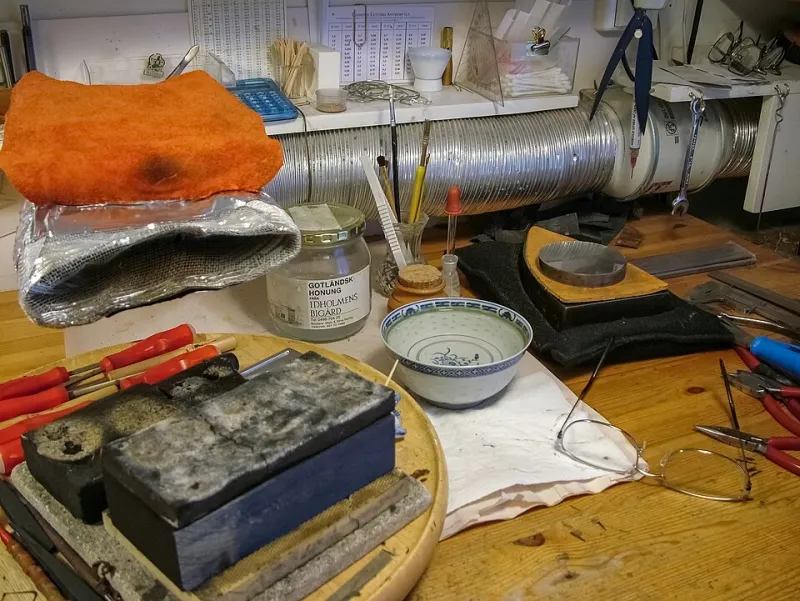
Photo: W.carter, CC BY-SA 4.0, via Wikimedia Commons
Every jewellery student is taught to account for the metal in front of them. Far fewer are taught to account for the metal beneath them. Yet a working bench sheds silver and gold continuously: filings from the saw frame, dust from emery paper, tiny fragments from soldering and pickling, and particles carried on shoes and cloths. In a small UK studio, that material is not merely dirt. It is stock that has temporarily left the tray, evidence of how carefully a workshop is run, and a sustainability habit that should be established long before a jeweller sets up alone.
Begin with collection points, not a broom
Sweep recovery works only when the sweep is separated at source. A single heap of floor dust mixed with solder snippets, steel wool and packaging offers little value and much contamination. Set up a small number of clearly designated collection points and keep them consistent.
- Bench tray: A shallow, lipped tray beneath the bench pin catches filings and saw dust during piercing and filing. Empty it into a labelled container at the end of each session.
- Emery station: Keep a separate container for used emery paper, abrasive dust and polishing debris. This material often carries fine metal particles and should not be mixed with coarse floor sweepings.
- Floor point: A dedicated dustpan and brush used only for the jewellery area. Do not use the same brush for general studio cleaning, and do not sweep the jewellery floor into the household bin.
- Apron and cloth point: A lidded container for worn polishing cloths, apron lint and bench-wipe debris. These items can hold fine metal and should be reviewed before disposal.
Label each container with its contents and the date the batch was opened. A simple paper label is sufficient, but it must survive the studio environment. Write in pencil or permanent marker, and keep a corresponding line in a notebook or spreadsheet. The label is part of the record, not an afterthought.
Avoid cross-contamination before it becomes a refining problem
Cross-contamination is the quiet fault in sweep recovery. A container that has held steel wool, base-metal offcuts or cleaning chemicals may introduce material that complicates refining or reduces the value of a batch. Keep the following separations as a matter of routine.
First, separate ferrous and non-ferrous waste. Steel wool, broken saw blades and iron-rich debris should not enter the precious-metal sweep. A magnet passed over a dry batch can help identify ferrous contamination, but it should not be used as a substitute for careful separation at source.
Second, separate emery and polishing waste from floor sweepings. Emery dust is fine and may contain abrasive material that behaves differently from heavier floor debris. Refiners can handle mixed batches, but a cleaner batch is easier to weigh, record and assess.
Third, keep chemicals out. Pickle residues, flux containers and cleaning solutions belong in their own waste stream. Do not tip liquid residues into a dry sweep container, and do not store sweep material in a damp or open container where it can corrode or become contaminated.
Finally, train everyone who uses the bench. In a shared student studio, a single person sweeping the floor with the wrong brush can undo weeks of careful collection. A short written protocol posted near the bench is more reliable than verbal instruction alone.
Weigh, record and review
A sweep batch should be treated like any other stock item. Weigh the collected material at sensible intervals, such as when a container is full or at the end of each month. Use a scale appropriate to the quantity, and record the weight in grams alongside the container label, the date range and a brief note on the source.
The record does not need to be elaborate. A three-column ledger is enough: date, source and weight. If the studio handles both silver and gold, keep separate records and separate containers. Even a small quantity of gold dust deserves its own line. The purpose is not to create paperwork for its own sake, but to establish a pattern. Over time, the ledger shows which processes generate the most recoverable material and whether collection habits are improving.
Photograph each closed batch before it leaves the studio. A dated image beside the labelled container provides a simple visual record and is useful if a batch is sent to a refiner or discussed with a tutor. Store the batch in a sealed, labelled bag or jar away from general waste.
Deciding when a batch is worth refining
Not every sweep is worth sending to a refiner. Small studios should assess three factors: quantity, metal type and refining cost. A few grams of mixed floor debris may contain recoverable silver, but the return may not justify the postage, assay fee or minimum charge. A larger batch of clean emery dust from gold work is a different proposition.
Ask a refiner about minimum quantities and accepted materials before accumulating boxes of mixed waste. Some refiners prefer dry, clearly labelled sweep material; others accept polishing cloths and filters under specific conditions. Keep the correspondence with the batch record. If the batch is not worth refining, consider whether it can be used for teaching or demonstration rather than discarded carelessly.
The decision should be reviewed rather than repeated by habit. A batch that was uneconomic at one stage of a studio's development may become worthwhile as volume grows. Equally, a studio that moves from silver to gold work may need to revise its collection points and labels.
A habit that travels with the jeweller
Sweep recovery is often presented as a sustainability measure, and it is. But its deeper value is disciplinary. It teaches the early-career jeweller that material has a lifecycle beyond the bench pin. It encourages labelling, measurement and a working knowledge of refining costs. It also prepares students for the practical realities of setting up alone, where no technician will quietly clean the floor and no tutor will remind them to check the tray.
The dustpan is not a humble object in a jewellery studio. It is a stock-taking tool. Used with care, it turns waste into evidence, evidence into better habits, and better habits into a more responsible bench.