The Mirror Bench: A Left-Handed Workflow for UK Jewellery Students in 2026

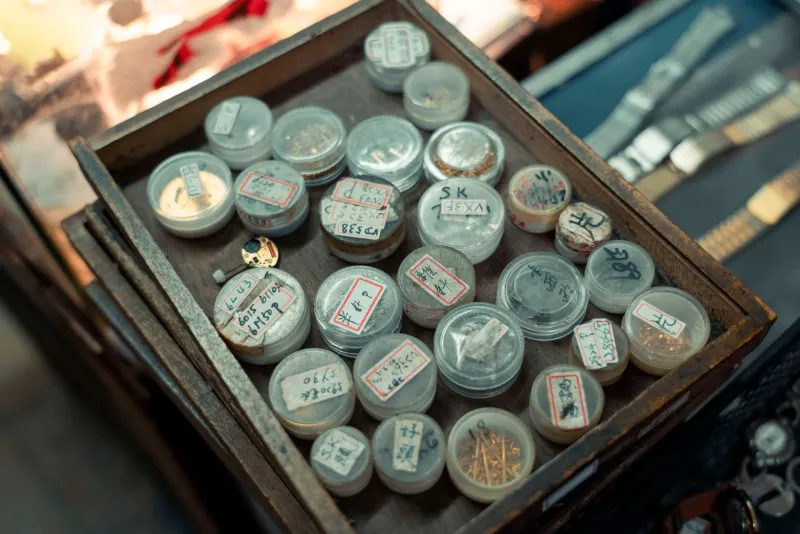
Photo by Photo by sour moha on Unsplash on Unsplash
Handedness is not a bench fault. Yet many left-handed jewellery students spend their first months solving a problem that the teaching environment has created: tools placed for a right-handed body, demonstrations performed from the wrong side, and well-meant advice to simply persevere. In a craft where control at the saw frame and torch is measured in fractions of a millimetre, that compromise is neither efficient nor fair. A more professional approach is to design left-handed practice into training from the outset, just as UK workshops already design for different bench heights, eyesight and experience levels.
Begin with the bench plan
A left-handed bench is not a mirror image for its own sake. It is an arrangement in which the dominant hand controls the tool and the supporting hand stabilises the work. For most left-handed students, that means the saw frame, file handle and torch sit naturally in the left hand, while the right hand holds, steadies or feeds. The bench pin, vice and soldering block should be positioned so that this relationship can occur without crossing the arms or twisting the spine.
In a shared UK teaching bench, permanent rearrangement is rarely possible. A written bench plan is therefore useful: sketch the bench from above, mark where the pin, vice, pickle, flux and torch should sit, and photograph the arrangement once it works. Clamp-on equipment is preferable to fixed equipment for students who move between benches. The aim is repeatability. A left-handed student should be able to arrive at the bench and set up in the same order each session, rather than rebuilding the workflow from memory.
Sawing and filing without compromise
Jeweller’s saw frames are broadly ambidextrous, but the handle and the direction of the cut still shape the body’s relationship to the bench. A left-handed student should hold the frame in the left hand and support the metal against the bench pin with the right. The blade should remain correctly tensioned and aligned; handedness is no reason to turn the frame upside down or to saw with the work unsupported. What changes is the position of the body and the bench pin, not the principle of the cut.
Filing follows the same logic. The file handle belongs in the dominant hand, with the supporting hand guiding or steadying the work. Where the work is held in a vice, the vice should be placed so that the left arm can make a natural stroke across the work. A right-handed bench often places the vice for a right-arm action; a left-handed student may need to move the vice to the opposite side or stand at a different angle. This is not fussiness. It is the difference between a controlled draw stroke and a cramped, uneven one.
Tutors should demonstrate left-handed where possible, or at least narrate the mirror image clearly. Standing opposite a left-handed student and performing a right-handed action can reverse the visual instruction entirely. Standing beside the student, or using a mirror, is often more effective.
Soldering: dominant hand on the torch
Soldering is the technique where handedness is most often treated as an afterthought. A left-handed student will usually hold the torch in the left hand and place solder with the right. That means the solder pallions, flux, pick and tweezers must be arranged for the right hand, while the torch remains free to move. Placing everything on the right side of the soldering area may feel counter-intuitive to a right-handed tutor, but it prevents the student from reaching across a live flame.
The soldering block should be positioned so that the work can be approached from a comfortable angle. A rotating block or a small turntable can help, particularly for chain links and larger pieces. Hoses and cables should be checked for pull, and the student should be able to set the torch down safely without crossing an arm over the work. These are standard risk-assessment points, but they become more pressing when the bench layout has been designed for the opposite hand.
Vice work and shared benches
A vice is a fixed point in an otherwise movable workflow. In a shared studio, left-handed students should be encouraged to use a clamp-on vice or a reversible bench peg where available. The test is simple: can the student make a full, controlled stroke with the dominant hand without the shoulder lifting or the wrist breaking? If not, the work is in the wrong place.
Hand-held work should not be overlooked. A hand vice or ring clamp can be rotated to suit the left hand, and small holding devices are often more adaptable than a permanently mounted vice. Students should be taught to adjust the work, not the body, wherever possible. Over-tightening a vice to compensate for an awkward position is a common error and can distort thin sheet or damage settings.
Feedback that mirrors, not corrects
The language of correction is deeply embedded in workshop teaching. A left-handed student is often told to use the right hand for a particular operation because that is how the tutor was taught. In most cases, the better instruction is to ask which hand gives the student control and then adapt the setup around that answer.
Assessment should focus on the quality of the cut, the flatness of the filed surface, the cleanliness of the solder joint and the safety of the process. Handedness should not become an implicit criterion. Peer demonstration can also help: a more experienced left-handed student may be the best person to show a newcomer how to position the bench pin for a piercing cut.
Buying choices for southpaw students
Left-handed jewellery students do not need to buy an entirely separate tool kit. Many core tools are ambidextrous: saw frames, needle files, pin vices, torch bodies and most measuring tools. Where handedness matters is in tools with shaped handles, scissors and shears, and any instrument that assumes a particular wrist angle. Left-handed scissors are genuinely useful for paper templates and some sheet tasks; left-handed snips can be worth trying before buying. But expensive “left-handed” kits should be treated with caution.
A sensible buying strategy is to try tools at college open days, ask tutors for adjustable or symmetrical options, and prioritise a good saw frame, a comfortable file handle and a reliable torch before novelty items. In 2026, UK training providers have a practical opportunity to audit their tool lists for handedness in the same way they audit for safety and accessibility. The left-handed bench is not a special case. It is a well-designed bench, seen from the other side.